Friday, June 30, 2017

Kids Today:What They'll Never Do

In this age of technology, there are many things children today will never learn how to do or never experience.  Here are just a few of them:

1.  Take a picture with a camera, and develop a roll of film.  With the exceptional quality of photos taken on the IPhone, there's really no need for cameras today, and of course, film is obsolete, except for professionals.

2.  Read a printed map.  GPS on our phones has pretty much made maps obsolete.  Remember the days of reading a map and planning your route?  Most kids will never learn to read maps.

3.  Tie shoes.  The necessity of tying one's shoes is pretty much dead.  Velcro has replaced shoe laces in many shoes.  However, kids should still learn this skill.  Typing bows is something everyone needs to do at some time or another.

4.  Remember a phone number.  Remembering numbers is great for your brain, but with speed dialing and IPhones, you don't need to know anyone's number anymore.

5.  Cursive handwriting.  I understand that cursive handwriting is not even taught in most schools anymore.  So much of a child's work is done on the computer.  I still think this is something kids should learn.  Writing in general is becoming a lost art, but I think it's still important.

A couple of other things that kids will no longer experience include dialing a rotary phone, making a collect call, renting a video, making or looking at a photo album, and using an encyclopedia for homework.   The times, they are a changing.    

Wednesday, June 28, 2017

The Many Uses Of Sponges

Sponges might be the best at cleaning spills and soaping up dishes, but if you confine them to your kitchen, you're missing out on their other hidden skills. These clever uses will have you stocking up next time you hit the cleaning aisle:
1. Remove pills from sweaters.
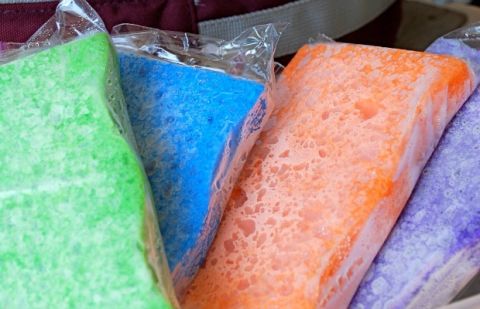
Textured scrub sponges (like these) make quick work of tidying up a worn sweater. Gently run it across the garment to banish fuzz.
2. Keep houseplants well-watered.
If you sneak a sponge into the bottom of a planter, it will soak up excess water when you give your plant a drink. This can prevent roots from rotting in too much moisture, and offers back-up sustenance if you forget to water your greenery.
3. Lift pet hair off carpeting.
A damp sponge is just the tool you need to pull pesky hair out of your carpet's fibers.
4. Make a no-drip ice pack.
Carole at My Kitchen Escapades likes freezing saturated kitchen sponges in plastic zip-top bags. As the ice melts, the moisture stays sopped up the sponge, minimizing mess.
5. Cushion breakables.
If you're storing, say, a ceramic bowl or collection of figurines, strategically place sponge pieces near any fragile parts or sharp corners that could easily damage.
6. Sop up rain.
Place a sponge at the bottom of an umbrella stand to protect the bottom from getting moist and mildewy. It's much easier to toss and replace the sponge when necessary than to give the canister a regular deep cleaning.
7. Make a nail-polish remover jar.
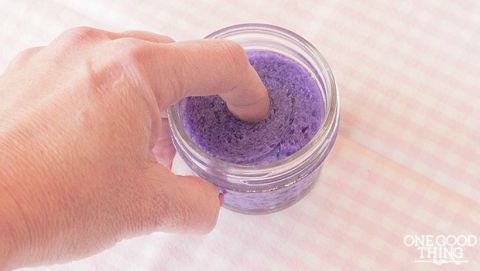
Jilllee at One Good Thing found a clever way to ditch the cotton-ball technique for removing nail polish. Instead, she made her own dip-and-twist jar by sticking a sponge soaked in remover inside a mason jar.
8. Protect surfaces from scratches.
Before you place a vase on your vintage coffee table, glue a few pieces of a sponge to the bottom to curtail any bumps and bruises.
9. Plug a drafty window.
If your window air-conditioning unit doesn't fit snuggly, press a sponge into any leaky holes to keep the chilly air inside.
10. Entertain kids.
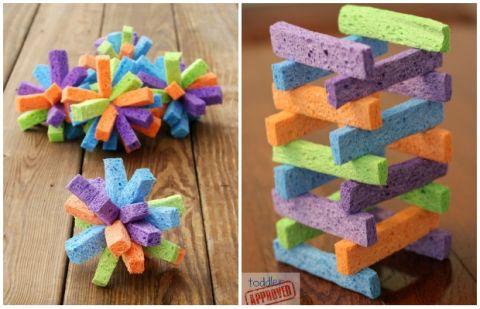
Surprisingly, when cut and tied into different shapes, sponges make for safe outdoor fun (like these water bombs) and extra-quiet games (like these building blocks that won't give you headache when they come crashing down).
11. Give yourself an at-home pedicure.
Place pieces of a cut-up sponge between your toes so you don't smudge your polish before it dries.

This information is from a Good Housekeeping article.  Rather than rewrite the article, I printed it in its entirety.  Great information.  I especially like number two and number seven.

Monday, June 26, 2017

When Do We Begin Lying?

It's a fact that we all lie.  Most of us tell "little white lies,"  but many children and adults alike tell major lies.  You may lie to someone on the phone and tell them your husband is not home when he actually is but doesn't want to talk, or you may tell a friend that you like her new hairdo, when you really don't.  These are harmless lies.  It was amazing to me to discover how early boys and girls learn to lie.

As early as 30 months, children lie.  There have been many studies done on children, and as early as 2 1/2 they will try to deceive.  For example, psychologists have done the following study:  Put a toy behind the therapists back and make a noise like "woof, woof," and have the child guess what animal is hidden.  They do this several times with different animals.  Then they say they are going to hide the animal in box and they tell the child they are going out of the room for a few minutes, and not to peek in the box.  80% of the children peek in the box, and 40% of the children lie about it when the therapist returns.

When I discovered that lying was common in boys and girls at a young age and obviously carried over into adulthood, I wondered if this was an American trait, or a human trait.  It's a human trait.  As our children get older, they see their parents "lying" all the time, so even though we tell our kids that lying is wrong, they see us doing it all the time.  We are telling them to do as we say, not do as we do.

Here's a funny story that Ron has often told that goes under the heading of "Out of the mouths of babes."  Ron was about 5 years old.  His parents had a friend who was very overweight, and they had obviously discussed this fact in front of him.  When the friend came over one day, and Ron's mom introduced Ron to the overweight friend, Ron said, "Mom, she's not nearly as fat as you said she was!"  We all have to watch what we say in front our children.  They are listening.

Friday, June 23, 2017

There's A New Fish Market/Restaurant In Town

Around April 15, a new fish market and restaurant opened in Carlsbad.  It's called Top Choice Seafood Market and Restaurant.  We stopped by for dinner one night, and was very impressed.  The menu is extensive, the food is good, and the market is so clean.  The only problem is, there are only a few seats for dining.  I assume most of their business is local takeout and catering.  I think there are 5 tables for dining.  Not exactly a dining experience.  Other than that, Top Choice is great.

Everything on the menu is under $10.  This includes an 8 ounce piece of poached salmon ( I ordered this) with hollandaise sauce, salad and rice.  Ron had the Po'Boy Sandwich with delicious french fries.  Other options were several kinds of fish tacos, fish burgers, several types of herring appetizers ($3.98 each), clam chowder, boullaibaise and fish chowder, in small, medium or large sizes, fish and chips, and just about any type of fish you can think of, all fresh, either fried, grilled or sauteed.  They even have bagels, cream cheese and lox with all the fixin's.

If you live in the Carlsbad area near Tip Top Meat Market, it's a great place for takeout.  Remember the little fruit and vegetable market adjacent to Tip Top?  Well, they turned that into Top Choice Seafood.  It's very good, but not good if you're looking for an evening out.  It's similar to Pellys in Carlsbad, with a more extensive menu, but not as much seating.  We really liked the food, but in the future, will go there for take out only.

I was just informed by Carlsbad resident and friend Louise, that the food bought in the fish market can be taken into the regular TipTop restaurant for dining.  That way, if one person wants fish and the other wants meat, they can order in two different places, then eat together.  Great idea.

Wednesday, June 21, 2017

The Enormous Problem Of Fraudulent Goods

Over 7% of world trade involves counterfeit goods.  From medicine to food, to clothing and toys, electronics, car and airplane parts, records and fine wine, everything is being knocked off!  In fact, the sale of fraudulent goods has grown 10,000%  in the past two decades.  (that's a conservative estimate.  The consequences are both economic and humanitarian.  For example, Pfizer has more than 20 products that they know have been knocked off.  Viagra, Lipitor, Plavix and Tamiflu are just some of them.  Imagine what this does to the bottom line of this public company.  The other thing is that over 700,000 people die each year from knock off drugs, mostly in underdeveloped countries.

In the U.S in 2007,  the University of North Carolina found that 77% of the fish sold as red snapper was actually tilapia, a less expensive fish.  Olive oil is another product that is often counterfeit.  Either the olive oil sold is not extra virgin, or is mixed with a cheaper oil, like soybean oil.

Clothing by well know companies like Tommy Hilfiger, Michael Kors, Guess, etc are sold all over the world.  Some knock offs are so good you can barely tell them from the real thing, others are not so good and will probably fall apart in weeks.  Who hasn't bought a Rolex watch from a street vendor, or a Louis Vuitton handbag?  This effects the bottom line of these companies.  It's a terrible thing, and it doesn't look like things will change any time soon,.

On my recent Crystal Cruise, we had a speaker talking about fraud.  He said you should never buy drugs on line, even from Canada.  You just don't know what you're getting.  The highest concentration of illegally produced goods come from China.  That's another reason not to buy goods produced in China.  You really don't know what you're getting.

Retail packaging is sometimes changed slightly, to make you think you are buying a name brand.  Go into Dollar Tree or a similar type store and see how things like Windex, Ajax, Clorox, and other products have packaging that looks similar to the real thing, but aren't.  You will know they're not the real deal as soon as you use the product.

Some fraudulent products are controlled by organized crime, others are just small time entrepreneurs with no scruples.  Just beware.  Anything you purchase is possibly not the real deal.  This includes expensive electronic products, including Apple.  You've got to be careful, and a little bit lucky.

Monday, June 19, 2017

A Visit To Lotusland

Several years ago a group of friends spent a weekend in Carpenteria.  We wanted to tour Lotusland in Montecito, voted one of the 10 most beautiful gardens in the country, but were there during the off season and they were not conducting tours.  Lotusland is a private garden, 37 acres of succulents and many plant species native to California.  Fortunately, my mom and I were able to visit Lotusland on our recent Crystal Cruise.  Ron stayed aboard while we toured some really beautiful gardens.

What made it especially wonderful was our guide.  (sorry but I can't remember her first name.  Her last name was Green).  She was super knowledgeable on all the plants and the history of the gardens.  She told us stories about Madame Ganna Walska, the Polish opera singer, who bought the property in 1941 and oversaw much of the renovation herself.  The gardens have gone through extensive renovations over the years, surviving soil and beetle infestations.  The gardens contain many species of native plants, including large numbers of succulents.  It's a fascinating 90 minute tour that I recommend to anyone who loves plants and gardening, visiting the Santa Barbara area.  Reservations must be made in advance.

Perhaps the most interesting part of the tour, was learning about the life of Madame Ganna Walska.  She was a Polish opera singer of moderate talent.  She did, however, have a talent for marrying wealthy men who made Lotusland hers.  Among her husbands were Count d'Eingorn, Theos Bernard, Harry Gindell Mattheus and Harold McCormick (International Harvester).  There were affairs, divorces and lots of intrigue.  Her history is long and complicated and too much to explain here.  I can just say this is beautiful garden, and anyone with an interest in horticulture will not want to miss.  

Friday, June 16, 2017

Domestic Abuse Is All About Control

I just finished reading a most compelling book called "I Let You Go."  It was about a young woman dealing with domestic abuse.  I couldn't put the book down, and felt the author so clearly let the reader know what the abuser was going through.

Often alcohol and drugs are a factor in domestic violence, but not always.  Characteristics of an abuser include controlling, manipulative, and seeing themselves as the victim.  What happens is always someone else's fault.  (usually the abused).  Violence is a tool to keep the mate from leaving the relationship.  Total control and power is what the abuser wants.

The abuse cycle has several stages, which the couple go through.  After completing the stages, the cycle usually starts again, unless the abused seeks help.  The build up phase, is when tension begins to build.  The stand-over phase, is when verbal attacks increase.  The explosion phase is when violent outbursts take place, then comes remorse.  In this phase the abuser blames the victim for his or her violent behavior and says it will never happen again.  Then comes the honeymoon phase, when everything is wonderful again, but only for a short time before the cycle begins again.  Abuse can be physical, sexual, verbal, psychological or emotional.  Whatever it is, no one deserves this kind of treatment, and should seek professional help.  Fortunately there are safe houses for women who feel they and their children are in physical danger from their abuser.

I highly recommend "I Let You Go."  I thought I knew alot about what an abused woman goes through, but this fiction book made it so much clearer.  Read it if you get a chance.